
Interview courtesy of EWAG Live Media Company


During my first artistic residency at Ateliers ’89 in Aruba, I experienced an unforgettable journey that profoundly enriched my artistic perspective. Although initial doubts may have arisen, the warm reception and support from various centers allowed me to overcome these uncertainties.
The exploration of my theme, focusing on the trauma experienced by children in social environments, served as the guiding thread of my stay. A particularly impactful experience was the opportunity to visit a morgue for children, an aspect of reality I had never encountered before. These moments were deeply emotional and reinforced my commitment to authentic and meaningful artistic representation.


With the resources and opportunities provided by Ateliers ’89, I could significantly deepen my research. Interactions with fellow resident artists, as well as engagements with the local community, broadened my horizons and added a new dimension to my work.
The various reception centers played a crucial role in facilitating my investigations, allowing me to approach the reality of children facing social trauma in a more intimate way. These encounters were emotionally powerful, fueling my creativity and inspiring me to express these complex experiences through my art.
Thus, my artistic residency at Atelier ’89 in Aruba was much more than a mere period of creation. It was a personal and artistic journey where I found the necessary support to delve into my research.


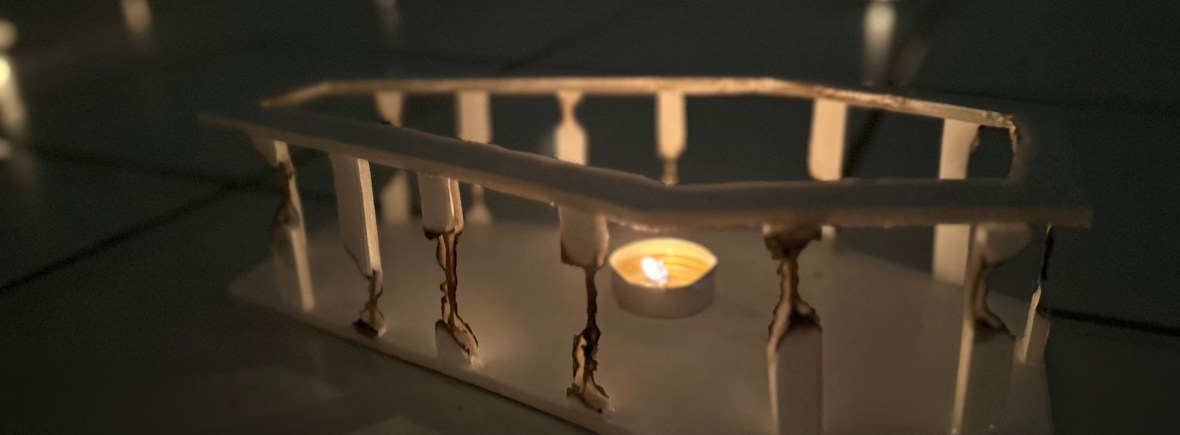
In the heart of my artistic commitment, I created an installation that transcends material boundaries to address a heart-wrenching reality. My work, a cradle-casket made of foam paper, symbolizes the delicate paradox many care centers face: the tragic loss of innocent children.
The choice of foam paper as a material adds a delicate and paradoxical dimension to the installation, reminiscent of the fragility of life. Each fold and contour of the cradle-casket testifies to the meticulous attention given to this work, while evoking the inherent vulnerability of childhood.
This installation finds its strength in its message about the often overlooked, even unknown, number of children who pass away in these care centers. The cradle, usually associated with birth and the promise of a new life, becomes here a symbol of premature farewell. The integrated casket cruelly recalls the tragic fate of these little beings.


Each fold of the foam paper becomes a silent representation of a life cut short too soon. The installation, at its core, prompts reflection on the challenges faced by these care centers, as well as the need for increased awareness of the staggering number of children who lose their lives in these circumstances.
Through this work, I aim to raise awareness, evoke compassion, and encourage positive action. My foam paper cradle-casket is not just an artistic installation but a visual testimony that invites recognition of the fragility of these precious lives and advocates for change that protects and preserves the innocence of every child.
 Caribbean Linked